
Thank you to our lovely friend Suzanna for being a guest this episode! Watch the video on Youtube. Below is a description of our nasty neighbourhood puzzle/gotcha game, ‘Burb Watchers.
THE ELEVATOR PITCH
‘Burb Watchers is a 4 – 6 player social-deduction puzzle party game set in a neighbourhood housing association. Players take on the role of homeowners who are subject to the strict but ever-changing rules of the housing association. They will closely watch their neighbours and by re-arranging and redecorating their lots, aim to comply with all rules while still having their house be unique in as many ways as possible. When attending the homeowners’ meeting, they can try to throw other players under the bus by enforcing new rules to bring everyone else into line.
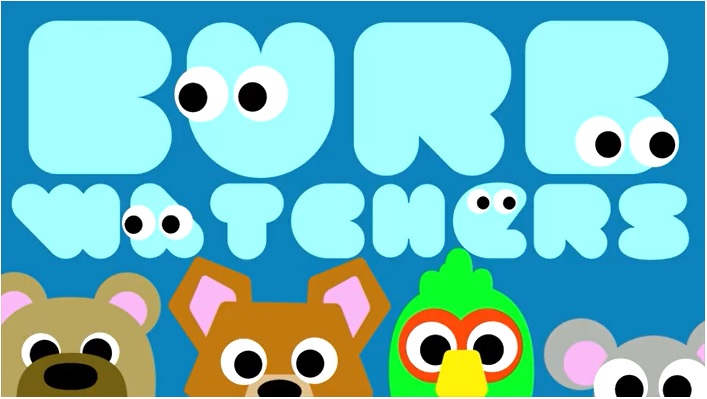
THE LOOK
This game is illustrated and designed to evoke a quintessential suburban ideal with a slightly sickly twist. The colour palette is simple and bold backgrounds with softer, pastel-coloured foreground elements. Characters are all “Sylvanian Families” style anthropomorphic animals, each with one or two details to make them slightly off-putting or menacing.
The core element of the game is individual Plot Boards which are illustrated to represent the basic fabric of a property: the house, front yard, back yard, and include sections of street and alley either side.
The components include:
- A Plot Board for each player, with a Score Tracker along the top.
- Object tokens for each player e.g. two cars, two bins, two types of fence, a front door, a garage door, etc.
- Shared object/décor tokens between all players e.g. “paint” tokens in 4 different colours, flower beds with different colours, etc.
- A full deck of Rule Cards.
THE AIM
Players aim to gain the most Pride Points by keeping their plot as unique as possible, while enforcing uniformity in the neighbourhood as a whole. Each round, they can change a certain number of things within their plot, then at the neighbourhood Homeowners’ Meeting, they can bring up rules to bring other players into line. Each round, players can score points for unique elements in their plot.
SET UP
Every player receives a Plot Board and sets their Score Tracker to 0. Each player receives their individual object tokens as above, and shared object/décor tokens are placed in reach of all players, with each element being shuffled and placed in two stacks (e.g. two stacks of “paint” tokens, two stacks of flower beds). Players set up their Plot according to its pre-printed arrangement (e.g. placing fences, cars, bins where indicated).
Each player is dealt a number of Rule Cards equal to the number of players. This hand is kept secret. Rule Cards state something about how the appearance or fabric of the property must be. Most rules are stated negatively, for example:
- A property may NOT have more than one car parked on the street in front of it.
- A property may NOT leave its bins in the road.
- A property may NOT be painted red or pink.
Some rules may be stated positively, for example:
- Fences MUST be painted white.
- Garage doors MUST be blue.
- Cars MUST be kept in garages.
TURNS
Each round is split into two phases: Improvements and Homeowners’ Meeting.
During the Improvements phase, turn order is a “snake draft”; beginning with the starting player, each player takes one turn until the last player, at which point the direction of play reverses. This continues until each player has had three turns.
During this phase each player may, on their turn, change exactly one thing within their plot. A change is counted as one of three things:
- Changing the location of an item or type of item, e.g. moving car to the garage or bins to the back yard.
- Adding or removing an item, e.g. putting up or taking down a fence, planting or taking out flower beds.
- Changing the colour of an item, e.g. painting your walls or door, or swapping white flowers for yellow ones.
When changing paint colour, flower colour etc., a player must choose between the top available token in one of the two stacks in the centre. If they subsequently change this item again, they return their previous paint token or flower bed to the bottom of one of these stacks.
It is up to players to interpret rules and attempt to bend them. For example, a player might try to get around a rule saying “garage doors must be blue” by removing their garage door rather than painting it. If a rule says “cars cannot be kept on driveways”, a player might move their car to their roof. This applies during both the Improvements phase and the Homeowners’ Meeting.
During the Homeowners’ Meeting, each player gets one turn to enforce a rule. They choose one Rule Card from their hand, play it to the table and read it out loud. Anyone who is not in line with that rule must make a change to their plot until they are. The Rule Card is discarded and the player draws a new one from the deck.
When every player has had a turn, players now score points for unique elements in their plot. Each player chooses up to three elements, and if no-one else has an identical element, they score one point. Colour and placement count as separate, so a player could score one point for having a black car, and one for having their car on their lawn, if no other player’s colour or placement of car matches. Similarly, a player can score a point for not having a fence if every other player has a fence.
SUMMARY
Players continue altering their plots and bringing new rules to the table in an attempt to catch other players out. They may watch the changes their opponents make in order to deduce what rules to look out for, or focus on presenting as many unique elements as possible.
At the end of four rounds, corresponding to the four seasons of the year within the homeowners’ association, the player with the most Pride Points wins!
WHAT MAKES THIS GAME UNIQUE?
This is a puzzle game which combines observation and strategy with a “take that” mechanic. The theme of domestic pride, malicious compliance and nasty neighbourhood rivalry within an “idyllic” suburban setting gives ‘Burb Watchers its fair share of cuteness and satisfaction undercut with vicious competition.
 Big Crow Games